Dog-Waste-Compost
Getting Rid of Animal Feces in the Yard
Dog-waste-compost shouldn't get into the landfills. By using septo-bac, you can effectively deal with pet dog waste around the yard.
I know. Dog-feces is something we probably don't even want to think about as being anywhere near our yards or on our properties, but if you have animals, it's inevitable.
Dogs and all animals for that matter of course, do their business pretty much anywhere they want. If it's done in an ecosystem that can deal with it, that's fine.
What about homeowners who don't have the luxury of taking the pets to those places any number of times per day?
If we all had little dogs, it might not seem so bad. But many of us have large dogs and it can become quite a problem.
Some of us have to deal daily with neighbour-hood dogs and our pets do not get walked "elsewhere" either as much as they should. And so, we end up doing the walk-around the yard with shovels and rakes to pick up as much as we can to keep things clean.
Not an overly pleasant chore I look forward to.
Many people bag the dog-waste once scooped up, and it goes to the dump.
This is not a good idea.
First of all, here are some facts about our beloved pooches and the dog-feces they leave behind.
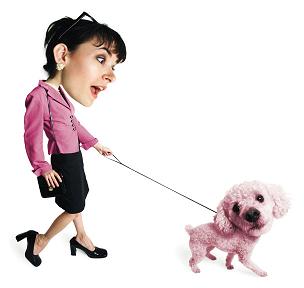
The smaller the dog, the smaller the problems
Dog waste contains a number of parasitic worms such as tapeworms, roundworms and hookworms.
Parasites can exist for ages in the ground, and pose a health hazzard for everyone, especially children and pregnant women.
The fecal-matter can get into and infect surface water and ground water.
Millions of pounds of dog waste can accumulate in one year and that can just be in an average-sized "small" city.
We all know that our landfills are jammed to capacity.
In terms of health hazzards alone and coupled with the fact that plastic bags take hundreds or more years to decompose in a landfill, this really isn't a very good scenario.
There are corn-based bio bags in use, but if they are buried beneath a ton of garbage, they will sit there for years and years as well.
These kinds of bags will decompose, but in order to do this, they have to be exposed to oxygen to start the process. If bags are buried any deeper than approximately 15 feet, the oxygen can't get at them.
Dumping the dog manure there is not a good solution to the problem period. Besides, there are laws against this in some places.
You can be fined as well for not using a pooper-scooper when taking your pet for a walk.
You can opt to start a dog-waste-compost site on your yard.
It can be buried and treated from time to time in a couple of ways. Some people use septo-bac, which is a biological compound used to treat sewage.
You can dig a hole and actually cover it with a lid, or bury a container and cover that with a lid at the ground level as well.
If you use a container, this will keep the sides from caving in like a dirt wall may do. Be sure to drill a few holes in the sides of the container, and add some small rocks for good drainage.
Wherever you do it, keep it away from vegetables or other edible plants in your garden. Choose a spot that is a bit out of the way for your dog-waste-compost.
The hole doesn't have to be that big. Three feet wide by a foot and half in depth is fine. Of course this all depends on how many dogs you have and their size.
After you have gathered the waste, put it in the hole, give it a sprinkle with the starter, and add some water.
Put the lid overtop, and within a few days, the process of breaking down will have begun. You can now add to it daily, and it won't smell.
After the waste has broken down considerably, it can be spread. This is done actually in ornamental gardens.
There are other options as well, if you would rather not go through the disposal process in this way. There are disposable bags that can be flushed and will dissolvevery quickly. The waste is treated through the regular waste disposal plant.
In some cities, there are companies that will pick up from you, if the dog-waste-compost idea is not viable for you.
Leave Dog-Waste-Compost, Return To Eco Friendly Pet
Return To Carbon Footprint Home Page



Thanks For Your Support
Green Maven!
Popular Tips
Recycling Tips
Garage Sale Tips
Laundry Room
Green Travel
The Company Money
Eco-Baby Gift
Make A Diaper Cake