Reduce Kitchen-Carbon-Footprint
Create The Eco-friendly Kitchen
Wasteful habits form our kitchen-carbon-footprint. A switch to energy-star-labels would be a good first step towards upgrading old-kitchen-appliances. Older models are most likely working twice as hard to produce energy.
How we eat, cook and store food contributes greatly to the carbon-footprint in the kitchen we make daily.
Energy is wasted by way of the appliances we have and how we use them. We throw away food that should be composted and so many products end up in the landfills.
Much of this is fairly innocent. We all do things everyday without even thinking about it.
We need to be made aware of our wasteful habits, and become more educated about how things work. There are so many good tips that we can apply to begin to ensure that we decrease our kitchen-carbon-footprint as much as humanly possible.
Refrigerators use more energy than any other appliance.
Old-kitchen-appliances, especially refrigerators, use up to 11% of household energy, and these older models can use up to 14% of your total household electricity use.
It's one of the biggest contributors to the the depth of your kitchen-carbon-footprint.
Check the door seal. Use the paper test. Stick a piece in the door and close it. If you can't pull the paper out, the seals are good. If the door seal is worn or dilapidated (meaning you can pull the paper out), click here to find a replacement. Otherwise, you are losing valuable cold air and overall efficiency.
Do not over-fill. You will not have circulation and the maximum efficiency.
Clean the coils at the back at least once per year, and make sure there is good air circulation between the back of your fridge and the wall.
Keep away from heat. Keep away from vents, rads and other appliances like the stove and dishwasher.
Don't leave fridge doors open. Be brief. It takes energy to cool warm air that gets in.
Cold items only. Put cold items back in quickly and don't put hot foods inside. Cool them first. Cover the foods with plastic. Moisture released from uncovered hot food makes the compressor work harder.
Clean it out regularly. Keep the fridge organized and provide good air circulation.
Optimum temperature should be 35-38F (1.7-3.3C) This will ensure food safety and maximum efficiency. Check the temperature with a glass of water and a thermometer set up on middle shelf.
Defrost in the refrigerator. Frozen foods in the fridge help to maintain coolness.
Get rid of old models. Buy better energy performers because they meet governmental standards and regulations. They are better insulated, have more efficient compressors, & better door seals which all contributes to the improvement of energy efficiency.
Note - As of April 2009, Energy-Star-labels (refrigerators) were required to be 20% more efficient than any other products.
Defrost your freezer regularly, at least once per year.
If there is more than a 1/4 inch of frost, the motor is now
starting to strain itself.
Keep it at 0 degrees. Do not place hot foods inside. Let it cool down first.
 Dishwashers have a high-powered heat element.
Air-dry your dishes by opening the door on the last cycle.
Turn down the temperature of the water a bit, and wash the dishes when machine is full for efficiency. Check to see if you have this option.
Remember to empty the filter or food trap regularly.
Don't use the "temperature boost" feature.
Don't pre-wash; scrape dishes or rinse in the sink first.
When shopping around, remember that Energy-Star-labels
indicate water and energy savings.
When using your stovetop use lids on pots to trap the heat
and lower the temperature to save. Make sure the lid properly fits the pot. You can save up to 20% more energy and the food
cooks quickly and evenly. This contribute greatly to reducing your kitchen-carbon-footprint.
Once boiling, turn down just enough to maintain it. Turn off 3 minutes before it's time. Your food will still cook at the same temperature and save energy.
Keep elements and reflectors clean to reflect the heat more efficiently.
Preheating an oven is reserved for baking breads and pastries.
Otherwise, it's not necessary.
Turn off the oven just before done. For 10 minutes, the food will still cook in the same heat.
Electric ignitions on gas ovens and ranges save on gas rather than having a continuous pilot light on.
Prefer outdoor cooking? Read up on some
Cooking With Charcoal Tips
to make your next barbeque environmentally friendly.
Smaller Kitchen Appliances
Toaster ovens use much less energy than a regular oven. They are perfect for reheating small quantities.
Don't overfill them, and make sure air can circulate.
Electric kettles use more energy than using the top of the stove or even a microwave.
Be sure to use one with an automatic shut-off, and handles which are heat-resistant.
Keep it clean. It takes energy to heat a dirty kettle so combine water and vinegar to remove mineral deposits.
Don't overfill. Heat only what you need.
Use a microwave over a stove-top.
Convection Ovens draw less power than an oven.
A small fan circulates heat better. They reduce temps by up to 50 degrees and baking time.
Coffee machines have high energy heating units.
Blenders and processors have motors and they can actually make a
big kitchen-carbon-footprint. These items are only used briefly
though, which is the offset to being equipped with the motors.
Speaking of coffee, if you are a true coffee lover, please support
Fair Trade Coffee Certification
to be loyal to the farmers and their ability to make a living.
When packing a school lunch, are you really sending
your child to school with a safe lunch bag? How safe is it?
The Bento Box
is very popular for packing lunches to save on waste. Discover your artistic talents. It can be alot of fun!

Peeling Strips Make Great Garnishes
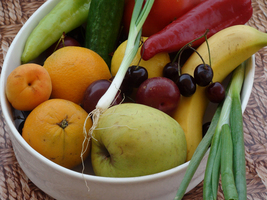
Have a Composting Pail Ready
Basic Kitchen Do's And Dont's To Reduce Your Kitchen-Carbon-Footprint
Use cloth bags when shopping to avoid plastic
Try to avoid products with excessive packaging
Keep plastics, paper, napkins etc. to a bare minimum
Buy produce only for one week ahead
Use dishes that refrigerate, freeze and reheat well for
leftovers instead of tossing them into the garbage
Don't store bread in the fridge - it goes stale faster
Freeze leftover meats and bones for soup stocks
Freeze vegetable peelings for cooking and baking, or send them to the compost pile. Before you do, you may get more use out of them yet reducing your kitchen-carbon-footprint even more.
Egg shells and coffee grounds are great in the garden to deter pests away from Hosta.
Potato and avocado peelings reduces eye puffiness
Orange and lemon peels are good for deodorizing your counter- tops and cutting-boards
Lemon and orange strips make great decorations in drinks
Puree leftover salad, add tomato juice and make a great healthy vegetable drink to reduce your kitchen-carbon-footprint in terms of being less wasteful.
Schedule your baking and try to put more than one item in the oven at once to save on energy and pre-heating
Recycle faithfully, Compost faithfully
Use water in the kitchen sparingly and use cold to start
Turn off lights and appliances when not in use
Always have a container ready for peelings and kitchen waste to put out in your large composter.
Don't throw out the cucumber peelings though. Find out what you can do, and visit the many Cucumber Uses there are.
Lots of vegetable leftovers? Looking for a hearty good comfort food? Dust off your crockpot and get good use out of it. Slow Cooker Chicken Recipes are easy, not time-consuming at all, go a long way, and make the best use of leftovers instead of throwing them away. Stamp out your kitchen-carbon-footprint!
If you don't own a crock pot yet, you can find out what I think makes the
best slow cooker
because of convenient features. I wouldn't be without one.
Don't have quite enough vegetables for a full salad? Don't throw them into the composter just yet. Just a few greens, eggs and potatoes can go a long way towards a variety of some great
Potato Salad Recipes
just for two people.
Reduce your kitchen-carbon-footprint even further and learn to develop better
Green Eating Habits
for you and your family.
Going green is good for the planet and your wallet. Why not see how far you can stretch your money by using a budgeting worksheet from Budgeting Steps.
Leave Kitchen-Carbon-Footprint,
Return To Carbon-Footprint Defined Home Page



Thanks For Your Support
Green Maven!

Popular Tips
Recycling Tips
Garage Sale Tips
Laundry Room
Green Travel
The Company Money
Eco-Baby Gift
Make A Diaper Cake