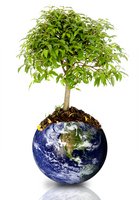
Harness-Wind-Energy To Cut Reliance
on Non-Renewable Resources
Cut Down Your Energy Carbon Footprint
Why would we not harness-wind-energy from a wind-turbine as a constant replenishable electricity source and leave a much smaller carbon footprint in the process? Why not capture-free-wind power?
Using alternative energy resources becomes more important to us all as producing power from fossil fuels continues to be not only complicated and costly, but continues to be destructive to our surroundings.
The Wind is An Amazing Phenomenon

From the wind we can get pleasure
and relief
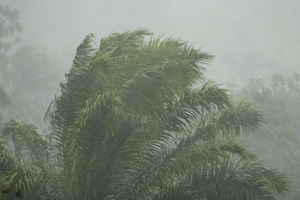
We may have to take
precautions and seek shelter
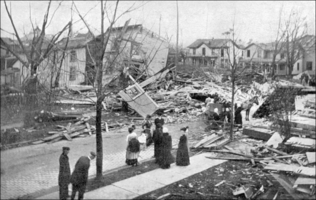
We may suffer total devastation.
The wind is a powerful force not to be taken lightly, but the ability to harness-wind-energy can prove beneficial at the right place and at the right time.
Wind power from wind machines, or wind-turbines could become a major source of our power supply someday.
The US Department of Energy says that to harness-wind-energy
could meet 20% of energy supply needs in the next twenty years.
So, how does it all work?
First of all, the history of wind power goes back to ancient times. People then knew the value of the ability to capture-free-wind power. So just like solar, this is not a newly discovered concept.
The wind is caused by how the sun unevenly heats parts of the earth. During the day air over land mass heats up quite quickly and it rises. Cooler air moves in to the empty spot and wind is created.
Turbines, or blades collect the force of the wind to in turn generate electricity from the rotary motion of the wind passing through. This motion triggers a wind powered electricity.
Wind turbines, or a wind-power-generator, comes in a variety of sizes. In fact, there are two types.
There is the horizontal-axis wind-machine and the vertical-axis wind machine. These wind turbine types for producing power from the wind are based on the directions of the rotating axis.
The bigger the turbine, the more power is produced. If wind-turbines are attached to another source of energy the turbine operates when the speed gets to a certain point.
Turbines and windmills need to reach certain speeds to generate a significant amount of power.
A 10 Kw wind turbine can generate about 10,000 - 16,000 kilowatt hours of power per year. This is a little bit more than what a small household would typically use.
In 2008 in the United States, wind machines generated just over 1% of the total electricity production. This is a very tiny amount, but that little bit did service over 4.5 million households.
Capture Wind Energy For the Advantages of Using Free Power
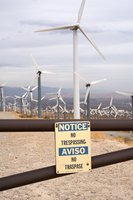
- Wind is one of the cleanest forms of produced power from a renewable source.
- It is a free source that is constant
- No fluctuations or swing in price as with fuel
- It can decrease the actual cost of electricity
- No need to rely on foreign suppliers
- No pollution such as smog, acid rain, greenhouse gas emissions; no burning of fossil fuels or massive environmental impact such as drilling causes
- To harness-wind-energy does not require the use of water which is a good thing in regard to our present water supply.
- Can generate employment because of the growth in industry in a number of blue and white collar positions. With a good economy, costs get lowered and savings are passed down to the consumers
There are certainly considerations to keep in mind when thinking in terms of capturing wind power. Wind-energy benefits are affected by a number of things.
You can't for example, just plunk a wind-machine anywhere, and expect to get instant signifcant results.
Not all locations are suitable at all. You must have quality and quantity of wind.
Consider wind speed, the terrain, obstacles, and closeness of buildings.
It's reasonable that if there are no barriers, wind speed does increase over open areas like over the tops of hills, coastlines and shorelines, and in mountain gaps that create wind funneling.
Where is the site located? Does it measure up to local legal guidelines?
Guidelines are being put into place to monitor things that consumers should be concerned about.
The American Wind Energy Association is creating methods and standards that will measure the safety, performance and reliability of small wind turbines.
People are definately interested in residential wind power, but they need to know what they are getting for what they spend.
Rooftop wind power is increasing in interest as well on a small scale for farms, and for other business owners too.
In turn, these systems will require basic and routine inspections in order to ensure full functionality that is safe and reliable. This may differ depending upon the manufacturer of the service contract.
People do desperately want to reduce their costs for everything more and more each day.
The costs involved in hooking up a turbine is coming down as demand goes up and efficiency improves with new technology. Still, people want to know how long is will take to get their investment back.
Investor interest in offshore wind power remains on the rise.
The European Wind Energy Association has released a report called "Oceans of Opportunity", and it is indicative of a huge interest in Europe to harness-wind-energy to develop windpower offshore.
Right now, most wind power plants are found in Europe and the United States. When broken down, many countries have a high capacity for wind-power. These include as well as the US, China, Germany and Spain. Denmark is lower on the list however they do attribute at least 20% of their power resources to wind energy.
Many governments happily give tax breaks to support development that will harness-wind-energy. Germany and Japan currently have incentive programs in place.
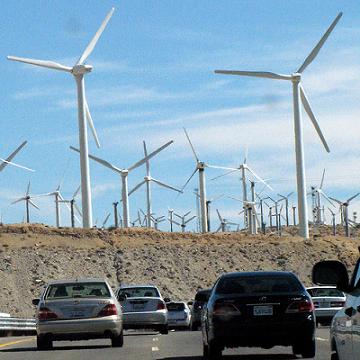
To be able to harness-wind-energy and meet that 20% supply in the next 20 years would be great to meet demand. Construction of the turbines and wind stations will have to move at a quicker pace to achieve this. And not everyone is on board with this.
The desire to move towards this goal has also triggered some wind energy controversies with some people, which is really not all that surprising. Tempers have flared over the idea and the desire to capture wind power, no matter what the benefits.
Wind Energy
is a complex natural occurence - Top Alternative Energy Sources.com provides detailed information on all aspects of wind power.
Wind Power Controversy
is a common subject and has some people in quite a state for various reasons. Find out why.
Leave Harness-Wind-Energy
Return To Carbon Footprint Defined Home Page



Thanks For Your Support
Green Maven!

Popular Tips
Recycling Tips
Garage Sale Tips
Laundry Room
Green Travel
The Company Money
Eco-Baby Gift
Make A Diaper Cake