Carbon Footprint of Cemetaries
by Hanna Feek
(Ajax, Ontario)
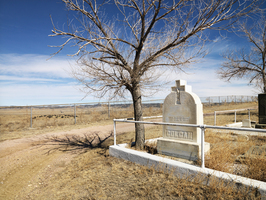
Cemetary Carbon Footprints
The Carbon Footprint of Cemetaries
I spoke with Joe Sehee & agree with his basic premise that traditional burial methods are costly on a number of fronts. Green burial methods provide consumers a different choice but as Joe mentions, there are many shades of green.
Educating the funeral industry & their clients about the negative aspects of embalming, etc. is a good first step but I question the rationale being used to suggest that "green burials" are sustainable to the planet.
Ref: Sustainability, is the potential for long-term maintenance of well being, which has environmental, economic and social dimensions.
Efficient & effective re-cycling is a huge goal in the matrix of human life.
Cemeteries are special waste sites, different than a landfill site because they look better above the ground, but what is actually taking place below the ground?
Green burials typically do not require the removal of any man made materials such bone implants (plastics, screws etc.) used for hip or knee replacements. Environmentally toxic lithium in pacemakers, mercury in teeth fillings do not decompose in an eco-friendly manner...they remain in the ground, ready to infiltrate the soil and groundwater.
Ref: The natural decay of buried human corpses can have a negative impact on groundwater. Contamination occurs as a result of organic residues and pathogens (germs and viruses) that are generated during the process of decay.
Bodies are wasted with burial or cremation as a whole. People are dying while waiting on lists for organs. All dead bodies with salvageable organs should be utilized to help people needing organ transplants. Bodies with AIDS, cancer, hepatitis & other diseases should be donated for scientific research.
Human burial, whether traditional or green do not represent responsible recycling.
Ref: A Swedish company has developed a way to deal with human remains that removes the most pollutant aspects of burial by sending them the way of the Terminator. Swedish Ecological Burial company Promessa wants to freeze human bodies and shatter them into millions of pieces using mechanical vibrations.
Cemeteries occupy land and diminish future land uses; therefore, they create a lasting carbon-footprint.




Thanks for the support
Green Maven!

